
Most people book a HydraFacial with one thing in mind: blackheads, dryness, dull skin, a few fine lines. Whether it is likely to help depends on the concern, and for several concerns nobody has studied it at all. Here is what the research shows for each, who should not have one, and what to expect in practice.
What a HydraFacial is
A HydraFacial is a branded form of hydradermabrasion. The first peer-reviewed description defines the technique as one that “combines crystal-free microdermabrasion with the pneumatic application of an antioxidant-based serum” (Freedman 2008). The manufacturer’s own instructions state its intended use plainly: the system “is intended to exfoliate the upper layers of the skin”. It is a surface treatment, and everything below should be read in that light. Our sister site explains how the treatment works.
How strong the evidence is for each concern
The published evidence is small. Our research found six small relevant papers, and only one tests a named HydraFacial treatment. No trial has compared a HydraFacial with a sham or no treatment.
| Concern | Best evidence found | Strength |
|---|---|---|
| Congestion and blackheads | One split-face study of a related technique: 23 women, one treatment | Weak |
| Active acne | One branded study: 20 adults, no control group, blue LED included | Weak, and active acne is excluded |
| Dryness | Antioxidant uptake in 10 treated women; a hydration trial with no posted results | Weak |
| Fine lines | Reported as decreased, without measurement, in 10 treated women | Very weak |
| Uneven tone | The same 2008 study, with the same limits | Very weak |
| Sensitive skin | No study | None |
Congestion and blackheads
The closest study treated 23 women once, split-face: one side had a 4% acid solution combined with suction, the other the acid alone. A contract research organisation ran it with a Korean university. Blackheads and whiteheads fell on the suction side at one, two and four weeks. Pore size and oiliness also changed, but not significantly more than on the acid-only side. The device was not named, so this is related to a HydraFacial, not proof of one, and funding is not recorded (Kim 2015).
For acne, the only study of a branded HydraFacial treated 20 adults with mild to moderate acne. It had no control group and was not blinded, every session included eight minutes of blue LED light, so the facial’s own effect cannot be separated out, and one author was a company employee. The paper states that no funding was provided (Storgard 2022). The manufacturer’s instructions also exclude active or inflammatory acne. The fair summary: it can help clear congested pores, but it is not a substitute for acne treatment from a GP or dermatologist.
Dryness
The treatment ends by applying serums. In the 2008 study, 10 women given six treatments had higher skin antioxidant levels than 10 who had the same serum applied by hand. A trial built to measure hydration across all skin types (27 enrolled, open-label, with the company as a collaborator) was completed in October 2024, but no results have been posted on ClinicalTrials.gov (NCT05932732). In a 13-person study, a related technique also raised water loss from the skin for about two days before it recovered (Kim 2016), so dry skin may feel tighter before it feels better.
Fine lines and uneven tone
One paper is the published source for both. Twenty women aged 34 to 56 were randomised to six hydradermabrasion sessions 7 to 10 days apart, or the same serum applied by hand. Fine lines, pore size and hyperpigmentation were reported as decreased in the treated group, but the abstract gives no measurement. Ten people were treated, there was a single author, the device was not named, and funding is not recorded (Freedman 2008). The manufacturer’s widely quoted results percentages are footnoted to this paper and a 2009 one, yet do not appear in either abstract. Honest expectations are “the look of fine lines” and “a more even-looking tone”.
Sensitive skin
No study has looked at sensitive skin. The manufacturer’s instructions say lower suction, lighter pressure and suitable solutions may be used on thin or sensitive skin, and that anyone with visible blood vessels or another vascular condition should get medical advice first. Settings can be adjusted for sensitive skin; that is not evidence that it suits it.
Concerns no study has covered
- Rosacea: no study found. The instructions mention rosacea as a reason to use gentler settings, but some UK clinics exclude it and others assess it at consultation. Rosacea needs assessment first.
- Melasma: no study found. A dark mark that is new or changing needs a GP, not a facial.
- Acne scarring: the European instructions list superficial acne scarring as an indication, but no published study was found, and a listing is not proof. Indented scars generally need resurfacing treatments, which is where to look instead.
- Neck, chest and hands: the manufacturer markets treatment beyond the face, including a hands protocol. No published outcome data for these areas were found, and the 2024 dermatology reviews of neck, chest and hand rejuvenation cover injectables and lasers, not HydraFacial (J Cosmet Dermatol).
The concerns listed on our home page should be read with these gaps in mind.
Men’s skin
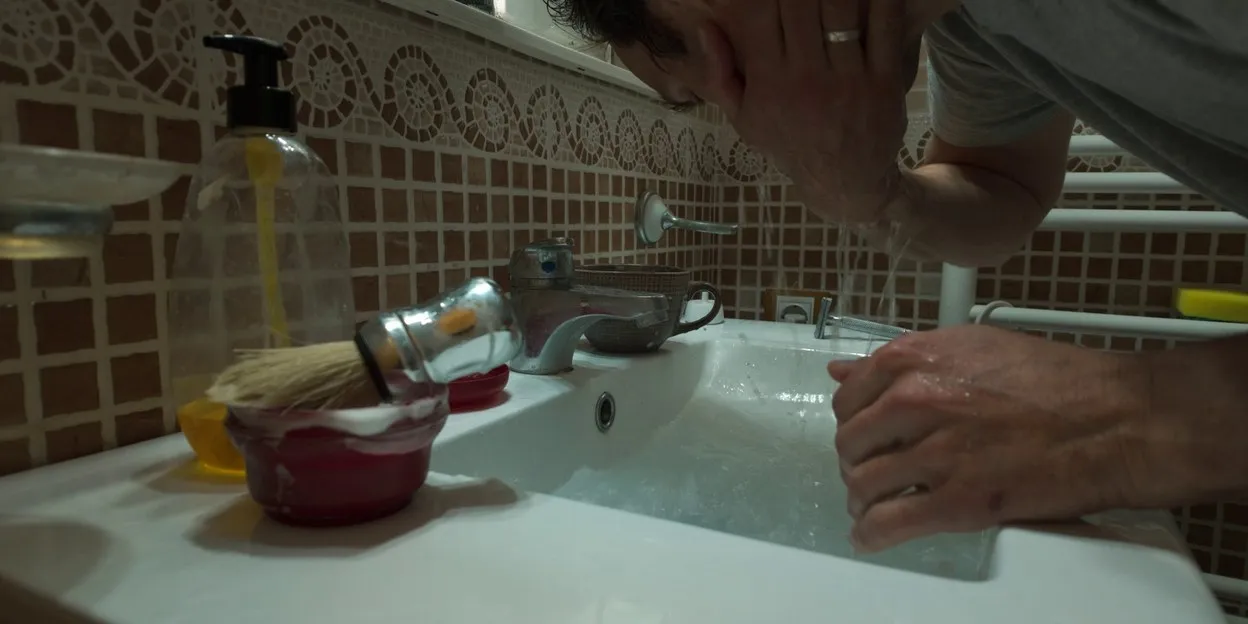
Clinics say men commonly book for congestion, blackheads and shaving irritation. That describes demand, not results: there is no male-specific data, and no study has tested a HydraFacial on shaving irritation. Irritated or broken skin should settle before treatment. One point is worth knowing: men tend to use less sunscreen (J Cosmet Dermatol, 2022), and sunscreen afterwards is the one aftercare step the manufacturer’s instructions name.
Who should not have one, and who should check first
The manufacturer’s instructions say the treatment is not intended for:
- pregnant or breastfeeding women, infants and children, because it has not been evaluated in these groups
- active skin conditions on the area, including active or inflammatory acne, eczema or dermatitis, rashes, psoriasis, sunburnt or injured skin, active cold sores, open lesions, skin infections and fragile skin
- growths, marks or lesions that have not been checked, which should go to a GP first
- anyone who has taken isotretinoin in the previous six months
- anyone allergic to an ingredient in the solutions
- the eye area and eyelids
Get guidance from your doctor first if you have an autoimmune disorder, cancer, a vascular disorder or a communicable disease, or take a medicine that can thin or weaken skin: immunosuppressants, chemotherapy, long-term tetracyclines, anticoagulants or prolonged steroids. A tendency to cold sores can be managed with preventive treatment, so mention it in advance. A sensitivity test on a small, discreet area should come before the first treatment. Our guide to who should not have a HydraFacial goes through each of these in more detail.
The practicalities
- Session length: about 30 to 60 minutes. The company describes 30 minutes; UK clinic menus run up to 60 for the top tier. Here is what happens during the appointment.
- Downtime: little or no downtime for most people. The instructions describe temporary irritation, tightness or redness that usually settles within 72 hours, depending on how sensitive your skin is.
- Aftercare: the instructions advise sunscreen of SPF 30 or higher afterwards. Clinics commonly add more: pause retinoids and acids for about 48 hours (some say up to 7 days), and avoid heat, saunas, pools and heavy exercise for 24 to 48 hours. No trial has tested any of this; it is sensible advice, not evidence. Contact the clinic if redness lasts beyond about 48 hours, or if you notice blistering or swelling. More in our downtime and aftercare guide.
- How often: no study has set an interval. The studies used courses, such as six sessions 7 to 10 days apart, and clinic schedules are commercial advice (how often to have one).
- Cost: varies by clinic and by tier; see our pricing. Our UK cost guide explains how sessions and courses are priced.
Why results are temporary
The only independent imaging study treated 8 volunteers of Fitzpatrick skin types II to V once with an unnamed hydradermabrasion device, and imaged their skin before, immediately after and at two weeks. The outer layer thinned from 9.42 to 6.67 µm straight after treatment and was back to 9.75 µm at two weeks. The authors declared no conflict of interest (Razi 2024). No study has followed results beyond four weeks.
That fits what dermatologists say about microdermabrasion generally: results “tend to be temporary” and follow-up treatments are “usually necessary” (AAD). UK advertising guidance accepts that removing dead surface skin can reveal “younger-looking” and “smoother” skin, and asks that claims stay with the appearance of skin (ASA/CAP). So expect an immediate glow and smoother-looking skin, not a lasting change. Results are temporary, so most people book regular sessions. You can see what to expect on our results section.
If you want to talk through your own skin, VIVO Body Studio at 70 West Regent Street, Glasgow, offers HydraFacial consultations, and the questions above are part of that assessment. Read our common questions or book a consultation.
At a glance
Pros and cons
Pros
- It can help clear congested pores and leaves skin looking smoother and fresher straight away
- Suction, pressure and solutions can be adjusted for thin or sensitive skin
- Little or no downtime for most people, with any redness or tightness usually settling within 72 hours
Cons
- The evidence is small: no trial has compared it with a sham or no treatment, and the only branded study had 20 people
- Results are temporary, and no study has followed them beyond four weeks
- Rosacea, melasma, acne scarring and the neck, chest and hands have no published study at all
Common questions
Your questions, answered
01Which skin concern has the best evidence for a HydraFacial?
Congestion. A 2015 split-face study of a related acid-and-suction technique found fewer blackheads and whiteheads for up to four weeks after one treatment. It treated 23 women and did not name the device, so even the best-supported concern rests on weak evidence.
02Is a HydraFacial worth having on my neck, chest or hands?
The manufacturer markets treatment beyond the face, including a hands protocol, but no published outcome data for these areas were found. If you try it there, treat it as an experiment rather than an evidence-based choice.
03Will a HydraFacial get rid of acne scars?
There is no evidence that it improves scarring. The European instructions list superficial acne scarring as an indication, but no published study supports it. Indented scars usually need a resurfacing treatment, so ask about those instead.
04Does a HydraFacial help with shaving irritation?
No study has tested that. Clinics say men often book for congestion, blackheads and shaving irritation, but that describes why people book, not what the treatment does. Irritated or broken skin should settle before any treatment.